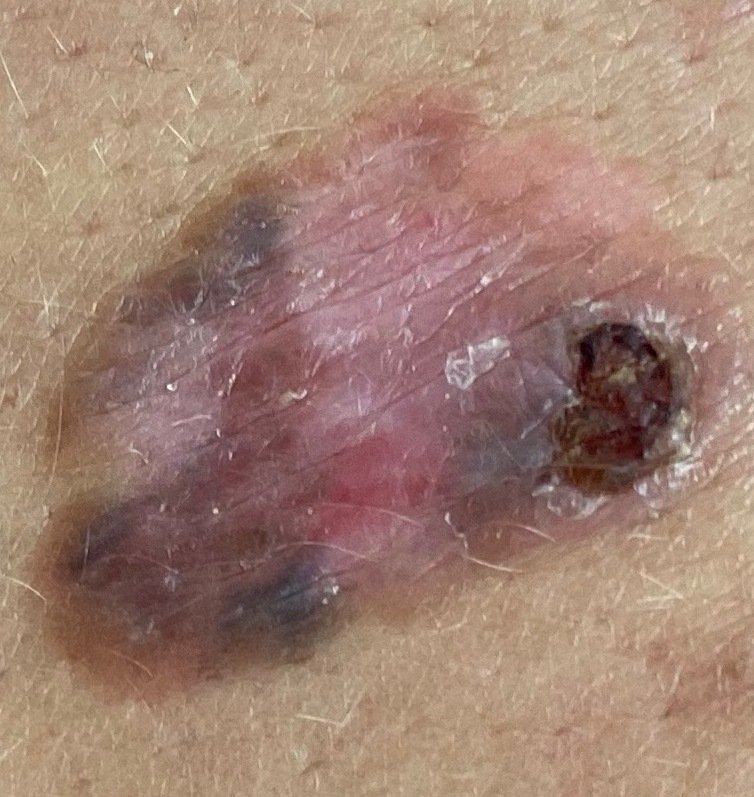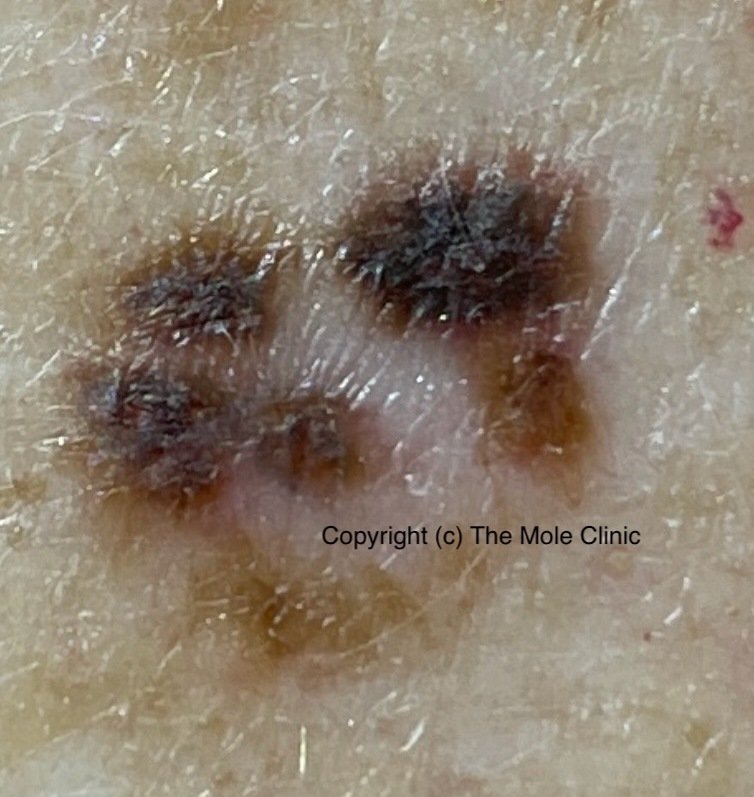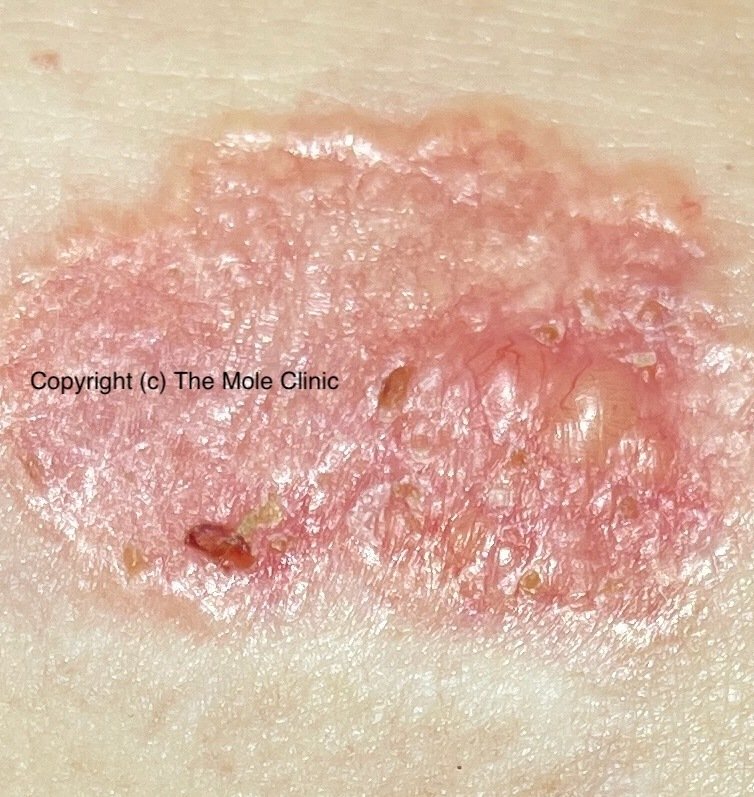
Skin cancer screening is a detailed head-to-toe examination (excluding private areas) performed by our physicians to identify suspicious moles or lesions. Our team uses trained clinical assessment and dermoscopy to evaluate areas that may require ongoing monitoring, removal or biopsy.
Procedure Details
Procedure: 15–20 minutes. Recovery: No downtime. Type: Complete skin exam.
When to see a doctor
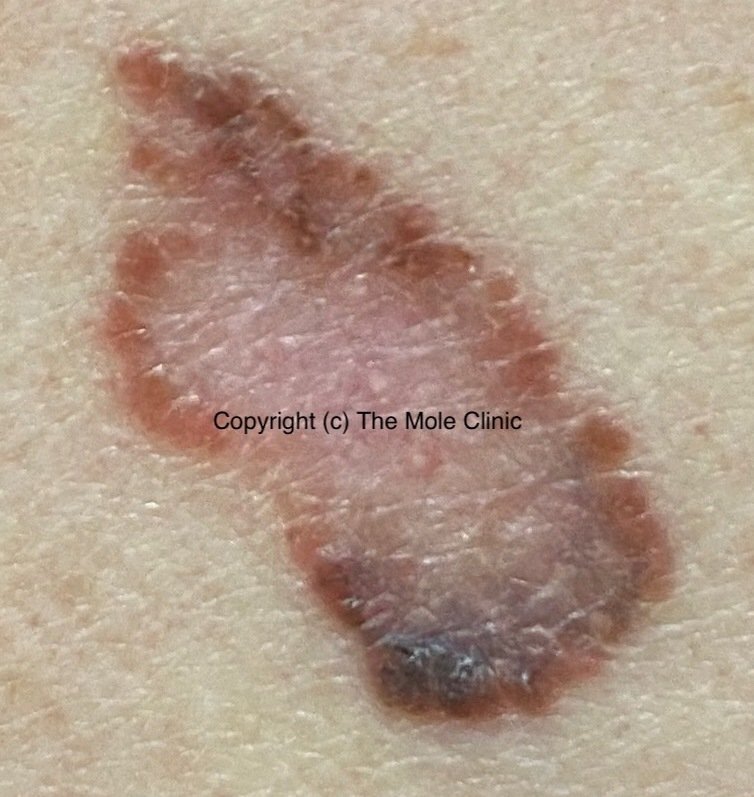
The ABCDEs of melanoma
If a mole shows any of these warning signs, book a screening — early detection saves lives.
Your family doctor sends a referral to our clinic. We contact you to schedule the screening.
2
Full skin exam
You change into a gown. A physician systematically inspects your scalp, head, neck, arms, trunk, buttocks, legs, hands and feet (genital areas excluded).
3
Dermoscopy
Concerning lesions are inspected with a dermatoscope for a closer, magnified view.
4
Biopsy if needed
Suspicious lesions are biopsied in the same visit when appropriate. Biopsies are OHIP-covered.
5
Report & rescreen
A written report is faxed to your referring physician. Most patients return annually.
In our patients' words
Real stories from mole-removal patients
This clinic is definitely busy, but the waiting area is spacious, clean, and very comfortable. The two women at the front desk were so friendly and knowledgeable—one seemed to be in training, and she was doing an excellent job.
Once I was in the room, Dr. Khan made sure I felt comfortable. He was quick but very thorough, explained the different types of moles, and gave me the great news that everything was clear.
Before I left, the receptionist booked my follow-up for next year, and something I really appreciated was how everyone addressed me by my first name. It made the whole experience feel warm and personal, almost like they already knew me.
I highly recommend this clinic if you're looking for a skin specialist.
Fiona S · 6 months ago
I can be quite anxious during any medical thing but both of the doctors here helped me so much. They were so incredibly kind, so understanding and thorough with their checks. They were patient with the questions and anxieties I had and over all it was an amazing and relieving experience for me! If you have to go somewhere like this then I would 100% recommend coming here!
Skin cancer screening is a medical service and does require a referral from a doctor.
What happens during a screening?+
Patients undress to their underwear and are provided a gown. The physician systematically inspects the scalp, head, neck, arms, trunk, buttocks, legs, hands and feet (genital areas excluded). A dermatoscope is used for concerning lesions and a report is faxed to your referring physician.
Is a biopsy covered by OHIP?+
Biopsy of any skin lesion suspicious or concerning for skin cancer is covered by OHIP.
How often should I get screened?+
After a Melanoma diagnosis or with many suspicious moles: every 6 months. A relatively benign assessment: annually. Previous skin cancer or strong family history warrants more frequent screening.